Wednesday, 6 July 2016

TRAI is seeking the appointment of an average data speeds and validity of 1 year for data plans

The Telecommunications Regulatory TRAI on Wednesday that he was about to float consultation paper on the new quality of service standards for wireless data transfer per month, which will be considered in determining the average data speeds to be on the operators to offer their customers in order to provide speeds better browsing on mobile phones.

Earlier, it was the organizer of the quality of service standards for wireless data transfer in 2014 and asked the telecom operators to refer to the minimum speed, but telecommunications companies complained that the "laws of physics" does not guarantee a minimum speed which can provide to consumers.


"Now, we say that if you can not provide a minimum data speed, then at least the average speed can not be guaranteed. In the consultation paper, we will discuss what can be average standards," the newspaper quoted chairman of Tri Sharma as saying economic newspaper.

"We will issue a consultation paper soon to reform the quality of service standards for wireless data transfer," said Sharma.

At the same time, the regulator has also proposed to increase the mobile charging voucher Internet services validity of up to 90 days to 365 days to promote the use by consumers marginal.

The Telecom Regulatory Authority of India, "after the various aspects of the case study, the authority feels longer validity of 365 days instead of 90 days, the current can be useful for consumers marginal, first-time users and consumers sensitive regarding the price," said in a statement.

At present, the company can issue recharge that can be valid for a maximum period of 90 days voucher. If the consumer fails to consume the amount of mobile Internet data purchased through a coupon and then lapses unused data.

The regulator said it had received requests seeking longer validity of the data packets in the first place to address consumer concerns marginally wireless Internet who prefer less data doctrine packaged with a longer validity.

It sought regulator comments from the public on the proposal of July 26 on the proposed amendment to the existing rules.

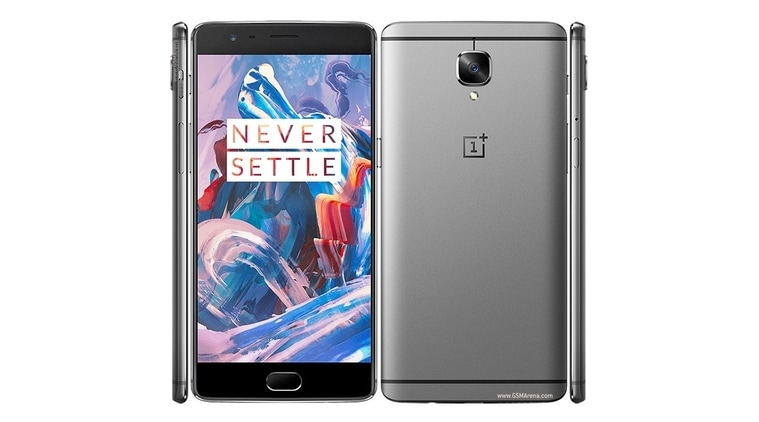
OnePlus 3: OxygenOS 3.2.0 released now

OnePlus new OTA firmware update in March, OxygenOS 3.2.0, which was released yesterday has been temporarily removed again due to reports of problems after the upgrade. OnePlus has announced that it will undo the update for now, while the matter is investigated as reported in the online forum of the company.


OxygenOS 3.2.0 is set to add features including better management of RAM, a sRGB mode for exposure and improved GPS performance. Other improvements include better audio playback quality, better camera quality / functionality, security patches and fixing some issues gallery.

OnePlus 3 was released in India last month, and has 6 GB of RAM and 64 GB of storage. The 5.5-inch smartphone runs on a Qualcomm Snapdragon 820 processor, and has a front camera + 8MP rear camera 16 megapixels.

In our opinion, we loved the looks of OnePlus three top quality and performance. House was also another strong point of smart phones, which are giving exceptional photographs in low light and normal performance for its price.

The only problem with OnePlus phones has been the ability to change to create problems that could not have existed before. With our previous unit OnePlus 2, we had realized this, and a set of changes as a result the phone overheating and increased battery consumption.

In the case of OnePlus 3, the company really need to get the right software and ensure that the changes do not end up creating the same set of problems that plagued the smartphone before.
OnePlus 3 is available on Amazon for Rs 27,999 in India and the company has removed the invite system sales this year.

Samsung TVs that come with an application Ticker Cricket

Samsung phone line is known for the large number of variants that the Korean company pushes out; it is almost impossible to keep track of all the different phones that Samsung has at this time, and the number of terminals that releases each year. Now, the company seems to be adapting the same strategy for its TV line - Samsung India launched on Tuesday a staggering 44 new TV models, through its SUHD, intelligent, and lines of Beat joy. The line consists of SUHD 4K high-end TVs; Smart is the game mid-level Samsung, focusing on upgradeable smart TVs; and the range of the joy of stroke is relatively affordable TVs.

The launch of 44 new TVs in one day is a clear demonstration of large catalog of Samsung, which - obviously the company expects - means there must be something for each of these three lines of televisions. It is said, citing a report by research firm GfK market April this year, with 31 percent of the total market share of televisions in India, and 46 percent of the TV market (very early) 4K. From now on, the best known brands in space are Samsung, Sony, LG and, along with some smaller companies like Vu. So what's next for the television market in India?


"The next big thing in television it seems that the curved panels because that is the new form factor design that is updated and in terms of image quality will be ultra-high definition," a representative of Samsung in the event release said Tuesday Gadgets 360. "These two are very tangible benefits for the consumer, which is why we think UHD curved panels and televisions make sense."

The representative also stressed that Samsung now offers consumers more options for UHD TVs. "We are now offering Smart UHD TV to consumers in more screen sizes," he added. "Previously, Samsung TVs SUHD option was only available in 55-inch to 65-inch models. This year we launched a SUHD 49-inch model at a much lower price."

At launch, the company of South Korea also introduced new features that will be available through the SUHD, intelligent, and joy of the TV hit including the new Cric-o-mania application is the company's internal application for cricket fans.

Speaking of the new application, the Samsung executive said the application has been developed by the Research Institute of Samsung Delhi, and allow users to update their cricket match live favorite, even when watching another channel . The application has a live ticker is updated every race with cricket updates that you can see at the top of any program you are watching.

"The application has been specially developed for Indian consumers and their love for the game of cricket," the executive said.

Another notable feature that will be present in the new Samsung TVs is automatic detection device and a remote, which automatically recognizes the type of device connected to the TV if it is a system of home theater, game console or a decoder.

"We are confident that by leveraging a strong product portfolio, we can offer our customers more value with the latest technology," Rajeev Bhutani, Vice President, Consumer Electronics, Samsung India said. "Samsung has been committed to India for the past 20 years with the television business to be an integral part of the growth and success in the country. Our vision is to further consolidate our leadership in the TV market and reach miles all Indian households with televisions Samsung ".

More than 13 lakh Android phones in India affected by this malware

HummingBad Android malware was first seen in February this year that has infected more than 10 million smartphones, according to security firm Check Point. The firm notes that users most affected by the malware are in China and India.

According to Check Point, the group behind the malware is a group of developers of the mobile phone company China Yingmob ad server. The company has several teams developing platforms ad tracking and legitimate; however, there is said to be a specific group of people within the organization that is responsible for this malicious software. Check Point he says that the malware responsible for developing the equipment is HummingBad 'Team Overseas Development Platform', which includes four groups with a total of 25 employees.


HummingBad attempts to gain root access on the device in order to generate revenue for fraudulent advertising by installing additional fraudulent (and malicious) applications. Yingmob generates as much as $ 300,000 (approximately Rs. 20,257 million) per month in fraudulent advertising revenue through this malware, Check Point says.

The malware has now spread across 20 countries, but the largest number of users affected are in India and China. Check Point says 1.35 million (13.5 lakh) smartphones in India are affected by malware HummingBad, while China has users most affected 1.6 million. It is interesting that most of the affected Android devices are running older versions. About 50 percent of affected devices running Android KitKat, while 40 percent of affected users are running JellyBean on their smartphones.

Google recognized the threat and confirmed that it was aware of it. "The company has been aware of this family of malware are constantly evolving and improving our systems that detect it. We block facilities actively infected applications to keep users and secure information," Google spokesperson told CNET.

According to Check Point, HummingBad installed more than 50,000 fraudulent applications per day. These applications over 20 million ads are shown each day, generating 2.5 million clicks per day through illegitimate methods. While this malware minted an approximate amount of $ 10,000 per day for Yingmob, it gets 10 million Android smartphones and sensitive data stored on them in grave danger.

If you are an Android smartphone user you are seeing unnecessary advertisements, the smartphone could potentially be affected by malware HummingBad. To detect this malware, use a security application that can detect malicious activity on smartphones and flag. Options like Avast, AVG, and the lookout may be considered.

If you are not HummingBad malware on your phone, Dan Wiley Check Point says its only option is the factory restored the device, which means that you will lose all data, applications and stored passwords. It is recommended that you back up all data, contacts and other accessories before selecting the reset option. Wiley also advises against downloading applications in stores are not trustworthy. Google reviews the applications on the Play Store official, but the same can not be said of other unofficial stores.

Google Aquired French Image Recognition Firm

Two weeks after Twitter acquired the magic pony to advance their smarts machine learning to improve the experience of pictures and videos of users on its platform, Google is doing the same. Today, the maker of Android and search giant announced that it has acquired Moodstocks, a startup based in Paris that technology image recognition based on machine learning for smartphones whose APIs for developers is developed have been described as "Shazam for images."

API and SDK Moodstocks' will be discontinued "soon", according to an announcement on the website of the company. "Our goal is to create large image recognition tools within Google, but you can be sure that the current Moodstocks paying customers can use until the end of your subscription," the company said.


Terms of the deal were not disclosed and it is unclear how Moodstocks had raised: CrunchBase not notice any money VC, although when we first wrote about the company in 2010 noted that it had raised $ 500,000 in seed funding from investors European. As a benchmark, Twitter paid a whopping $ 150 million in cash for the acquisition of UK Magic Pony another week.

While magic pony was young and learned, while still largely under the radar, Moodstocks has existed since 2008, while working around the basic premise of improving image recognition through mobile devices . "Our dream has been to give machines eyes rolling cameras intelligent sensors able to make sense of their environment," the company writes in its acquisition / goodbye / hello note.

It seems that Moodstocks initially tried his hand at creating their own consumer applications, one of which was an application of social networks of all kinds: they let people take pictures of the media, such as books, then add your own notes about the media that would unite with other people annotations, as a recognition of special behind the scenes that would match the "fingerprint" on snaps of different people image.

An interesting idea, but he not removed, and as the company pivoted to offer its technology to other developers, at least one of its applications, Moodstocks scanner, became the SDK tools for testing before deploying it in your own application.

Google did not specify whether it will be launching its own SDK for developers to incorporate more images in applications services, or whether it will be the incorporation of technology exclusively in their own services for the consumer. What it does say is that it will bring Moodstocks team '- the launch was co-founded by Denis Brule and Cedric Deltheil - and technology company in its R & D operations based in France.

In a brief statement, Vincent Simonet, who runs the center, says that Google sees the Moodstocks work 'contributing to improved image searches, a service that is of course because it is offered in Google but now will be improved. "We have made great strides in terms of visual recognition," writes (in French), "but there is still much to do in this area."

It is unclear whether the Moodstocks work 'remains something designed for smartphones or whether to apply elsewhere. And there are areas where machine learning algorithms Moodstocks "could be useful, for example, Google searches to" learn "more about how to find images that are similar and / or related terms of verbal search. Google could also potentially use technology in an existing application, such as photos.

Or it could make an appearance in a future product that has not yet been implemented, although the most obvious use case for smartphones, is here: in a small terminal with a touch screen, users are so generally less inclined to enter text; and they may be using their own images (poor quality) to find other similar: In both of these scenarios, you have a tool for visual recognition stronger (say to take a picture of something and then use it as a search 'term' ) could be very useful.

Google has made other acquisitions in France, as FlexyCore (also to improve the performance of the smartphone). It has also made a series of acquisitions to enhance its imaging technology, as JetPac and PittPatt for facial recognition. And other large technology companies are also buying technology talent in this area. Earlier this year, it was learned that Amazon had acquired silently Orbeus, a start-up until it also develops recognition technology photo, with his touching AI service and neural networks.